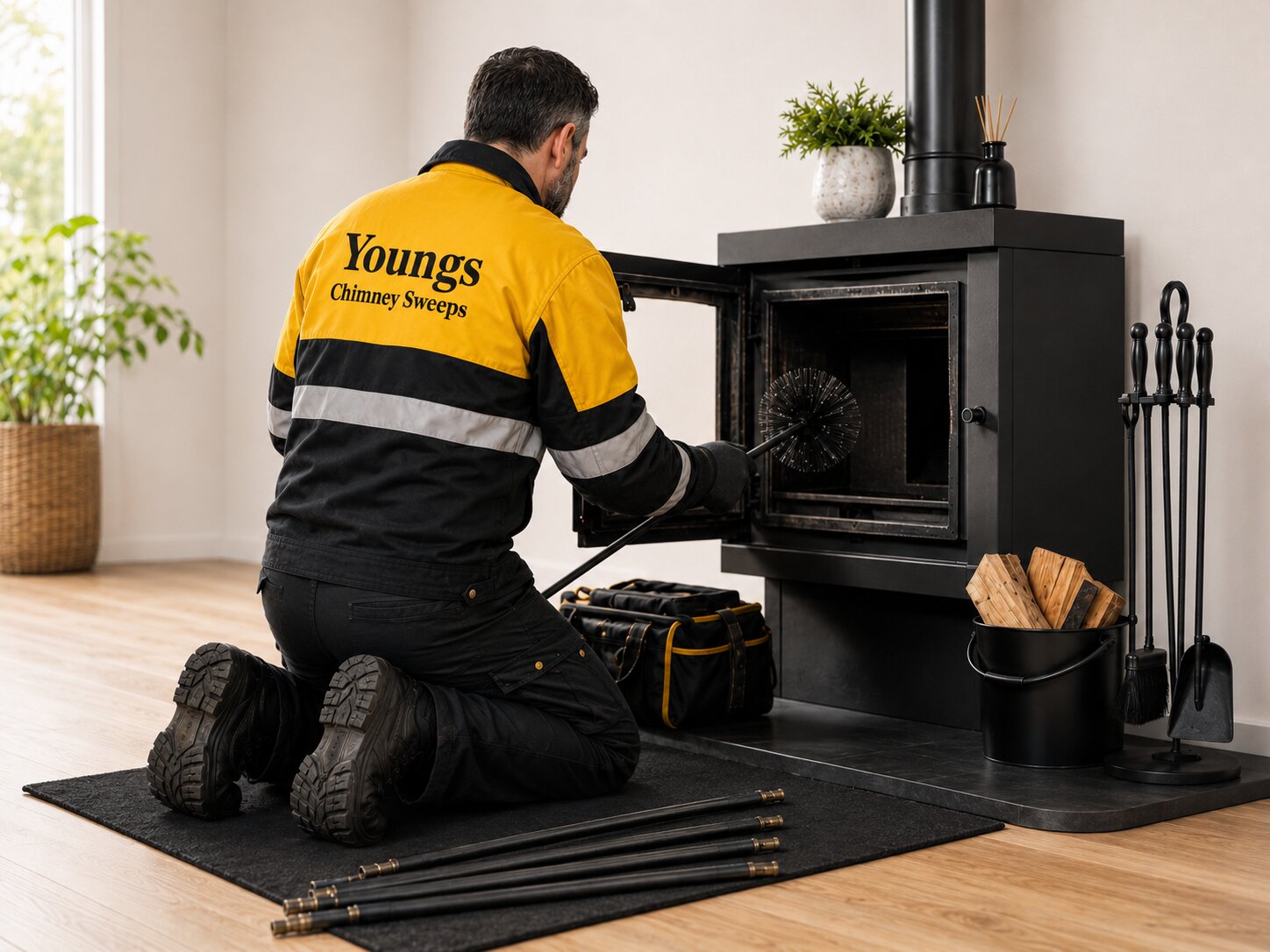
NO FUSS! NO MESS
CHIMNEY
SWEEP
- FREE SMOKE DRAW TEST
- CERTIFICATE INCLUDED
- NO VAT
Need Help? Call Us On For Expert Chimney Sweep Advice
JUST
£79.50

Friendly, Professional & Qualified Staff

35+ Years of Experience & Expertise

Open fires, Multifuel/Coal Wood Burners and Gas Fires Swept
Professional Creosote Removal
Creosote build-up can frequently occur in a chimney flue as it is a natural by-product of wood and other combustibles commonly burnt on fires. It is a highly flammable substance and if it is not removed, it becomes a common cause of chimney fires. The key to avoiding this hazard is the effective cleaning and maintenance of the flue.
Creosote occurs when the combustion (burning) of wood is not complete. The smoke from this wood includes several components including creosote, soot and tar droplets. Usually, the word creosote is used to describe this mixture, although it is likely to have tar as its main component. Creosote and tar removal is essential to avoid this build-up of flammable chemicals from becoming a serious fire hazard.
Our Chimney Sweep Services
Booking Made Easy Call Now 0161 7769832 / 07845815261
Step 1 - Get In Touch
Call for a free Quote- Our friendly professional staff will happily give you a free no obligation quote.
Step 2 - Select an Appointment
Arrange a date, Once you're happy with your quote, we will arrange a convenient date to visit you.
Step 3 - We're on our way
Sit back & relax, We'll take care of everything with our professional and comprehensive services.
Three Stages of Creosote
Creosote build-up can take different forms, with three stages or degrees used to describe its formation and chemical composition.
Stage 1, or First Degree
First-degree creosote is mostly soot, which forms a coating of fine black dust on the flue. This is the most common form of creosote build-up from an open fireplace, where there is sufficient air for complete combustion and a high temperature in the flue. At this stage, the build-up of soot is easily removed from the flue by sweeping.
Stage 2, or Second Degree
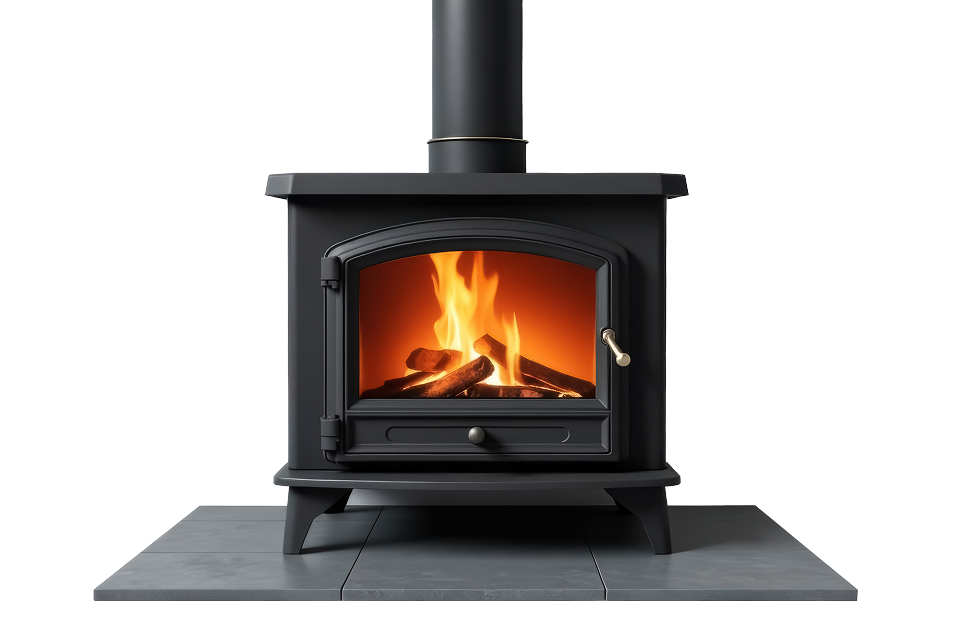
Second-degree creosote commonly occurs with wood-burning stoves or other fires where the incoming airflow is restricted. It builds up to a greater volume than first-degree creosote and, with a greater level of tar in the mixture, it forms a more rock-like substance of black flakes. It is harder to remove than first-degree creosote, but sweeping is usually an effective method of removal.
Stage 3, or Third Degree
Third-degree creosote is the most dangerous as well as being the hardest to remove. It is a thick, sticky tar substance that hardens, taking on a glazed appearance. Over time it can be frequently recoated to ever greater levels of thickness. It is highly flammable and has the potential to cause a devastating chimney fire. The common causes of third-degree creosote are:
- Uninsulated or cold chimneys
- Wood stoves where the air controls are turned down
- An oversized flue for the appliance
- The burning of unseasoned wood
- Insufficient air for combustion
Unlike first and second degree creasote, third-degree creosote and tar removal will require chemical treatment. Chemical treatments for creosote and tar removal work by using a chemical that reacts with the creosote upon application and modifying it to a brittle substance. The modified substance has a different contraction and expansion rate to the flue. In this state, it flakes away from the chimney flue and can be easily removed.